
Medical Circumcision: Public Hospital or Private Clinic?
Written by Dr Rahul Tipnis, FRACGP | Date: 6th September 2026
When a medical condition—such as pathological phimosis or recurrent balanitis—requires minor surgical intervention, patients and parents often evaluate their options within the healthcare system. A frequent area of confusion is whether medical circumcision can be performed in a public hospital, whether it must be accessed privately, and how Medicare rebates apply.
This guide provides a clear, factual overview of the public versus private pathways for medical circumcision in Victoria.
Public Hospitals in Victoria
Victorian public hospitals generally do not perform circumcisions for elective, cultural, or religious reasons.
Public hospital networks may evaluate circumcision referrals when there is a documented, severe medical indication, such as:
Pathological phimosis (severe scarring or tightness of the foreskin that has not responded to conservative treatments)
Lichen Sclerosus (Balanitis Xerotica Obliterans - BXO)
Recurrent, documented balanitis or balanoposthitis
Other clinically significant foreskin conditions
Access to the public system requires a formal GP referral followed by a specialist triage assessment (typically through paediatric surgery or urology). Conservative management, such as prescribed topical steroid creams, is routinely trialed first. Even when surgery is accepted as clinically necessary, elective surgery waiting times in public hospitals can vary significantly based on regional demand.
When Private Outpatient Care Is Utilized
A private clinic pathway is frequently selected when:
The procedure is requested for cultural or religious indications
Public hospital referral acceptance criteria are not met
A shorter waiting time is required to resolve ongoing symptoms
The family or adult patient prefers an outpatient procedure performed under localized anesthesia rather than a hospital day-surgery admission
While private care is not the only pathway for medical cases, it provides a timely alternative when public hospital access is restricted or delayed.
How Medicare Coverage Operates
Understanding funding structures helps families plan treatment effectively:
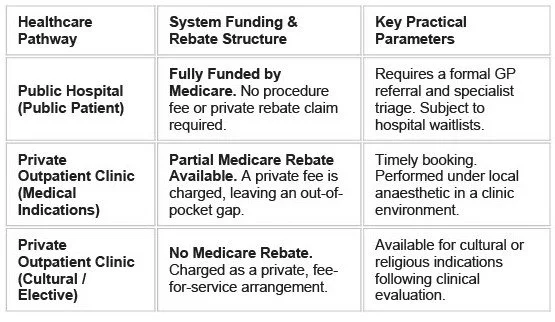
Mandatory Clinical Note: A face-to-face pre-operative consultation is required to evaluate anatomical suitability and verify whether a condition meets the clinical criteria for a medical rebate.
Indicative Fee Framework at Circ Vas Doctor
For documented medical cases, an estimated Medicare rebate of up to approximately $200 may apply post-procedure (exact rebate amounts are determined by Medicare guidelines at the time of claiming).
Indicative private professional fees (encompassing the initial consultation, local anesthesia, procedure, and routine follow-up care for up to three months):
6–8 Years: $750 (Plastibell Technique)
8–11 Years: $900 (Plastibell Technique)
11–14 Years: $1,100 (Plastibell Technique)
14–18 Years: $1,300 (ZSR Mechanised Stapler Method)
Adults (18+): $1,500 (ZSR Mechanised Stapler Method)
Note: Cultural or religious circumcisions utilise the same fee schedule, but do not attract a Medicare rebate. Flexible payment options may be available. Out-of-pocket costs are confirmed following clinical assessment.
How to Decide on the Right Pathway
A structured approach to evaluating care includes:
Consulting a GP: Have localised symptoms (such as tightness, pain, or recurrent infection) evaluated clinically.
Reviewing Conservative Options: Determine whether topical therapies (e.g., steroid creams) are appropriate initial steps.
Evaluating Referral Options: If minor surgery is indicated, discuss whether a public hospital referral or a private outpatient consultation aligns best with your timeline and preferences.
Comparing Care Settings: Review differences in wait times, procedural environments, anesthetic options, and out-of-pocket costs.
Practice Credentials & Safety Disclosures
Dr Rahul Tipnis (MBBS, MS, FRACGP) is a registered General Practitioner with an audited clinical record of over 900 circumcisions. He is not a specialist urologist or plastic surgeon. He does not perform cosmetic circumcisions or offer guarantees regarding specific aesthetic or sensory outcomes.
All surgical procedures carry inherent clinical risks—including localised bleeding, hematoma, infection, temporary swelling, delayed device separation, scarring, and variable healing trajectories. A formal, mandatory face-to-face consultation is required before any procedure can be scheduled, and patients or guardians are always encouraged to seek an independent second opinion from a qualified health practitioner.
Note: Circ Vas Doctor provides care for patients aged 6 years and above. Infant or newborn circumcisions are not performed at our clinic.
Arranging a Pre-Operative Consultation
If you would like to discuss whether a foreskin condition meets the clinical criteria for a medical rebate, or to learn more about private outpatient care in Melbourne’s west, contact our team.
📞 Contact Circ Vas Doctor: 1300 714 358
📍 Clinic Location: Harmony Health Medical Centre, 46 Hogans Road, Hoppers Crossing VIC 3029
(Serving families across Hoppers Crossing, Truganina, Tarneit, Werribee, Point Cook, and greater Melbourne).
⚠️ Mandatory Medical Disclaimer
This publication is intended strictly for general educational purposes and does not substitute for direct medical diagnosis, advice, or a personalized treatment plan. All minor surgical procedures carry inherent clinical risks—including localized bleeding, hematoma formation, infection, temporary swelling, or altered cosmetic healing. A formal, mandatory face-to-face clinical evaluation and consultation are required before rebate eligibility or surgical scheduling can be confirmed. Dr Rahul Tipnis is a registered General Practitioner (FRACGP, AHPRA Registration: MED0001552566). He does not perform cosmetic circumcisions; all procedures are performed strictly for verified medical, cultural, or religious indications. Individual recovery outcomes vary. Patients and guardians are always encouraged to seek an independent second opinion from a qualified health practitioner regarding surgical interventions.
