
The "Post-Vasectomy Phantom Ache": Distinguishing Normal Healing from PVPS
Written by Dr Rahul Tipnis, FRACGP | Date: October 4, 2026
Deciding to undergo a no-scalpel vasectomy is a highly effective, permanent family planning step. While the physical procedure itself takes only 15 to 20 minutes in an outpatient clinic setting, the recovery phase is where most men have questions.
During the weeks following a vasectomy, it is common to experience a mild, dull, intermittent aching or "heaviness" in the upper scrotum or lower groin. Patients often describe this sensation as a "phantom ache" or a lingering tugging feeling.
When searching for answers online, men frequently encounter scary-sounding medical terms like Post-Vasectomy Pain Syndrome (PVPS). This can trigger unnecessary anxiety.
This educational guide explains the natural physiology of post-operative recovery, clarifies why the "phantom ache" happens, and provides clear criteria to distinguish expected healing from true PVPS.
What Is the "Post-Vasectomy Phantom Ache"?
To understand why a dull ache can occur weeks after your procedure, it helps to review basic reproductive anatomy:
Continued Sperm Production: A vasectomy divides and seals the vas deferens (the transport tubes), preventing sperm from reaching the ejaculate. However, your testicles continue to produce sperm at their normal rate.
Epididymal Congestion: Sperm that can no longer travel upstream accumulate in the epididymis—the tightly coiled tube located directly behind each testicle.
Natural Breakdown & Reabsorption: Over time, the body naturally breaks down, recycles, and reabsorbs these unused sperm cells.
During the first 2 to 6 weeks post-procedure, as the epididymis adapts to this temporary backup, mild fluid pressure can build up. This condition—known as epididymal congestion—is the primary cause of the "phantom ache." It is a normal, temporary anatomical transition, not a sign of damage or procedural failure.
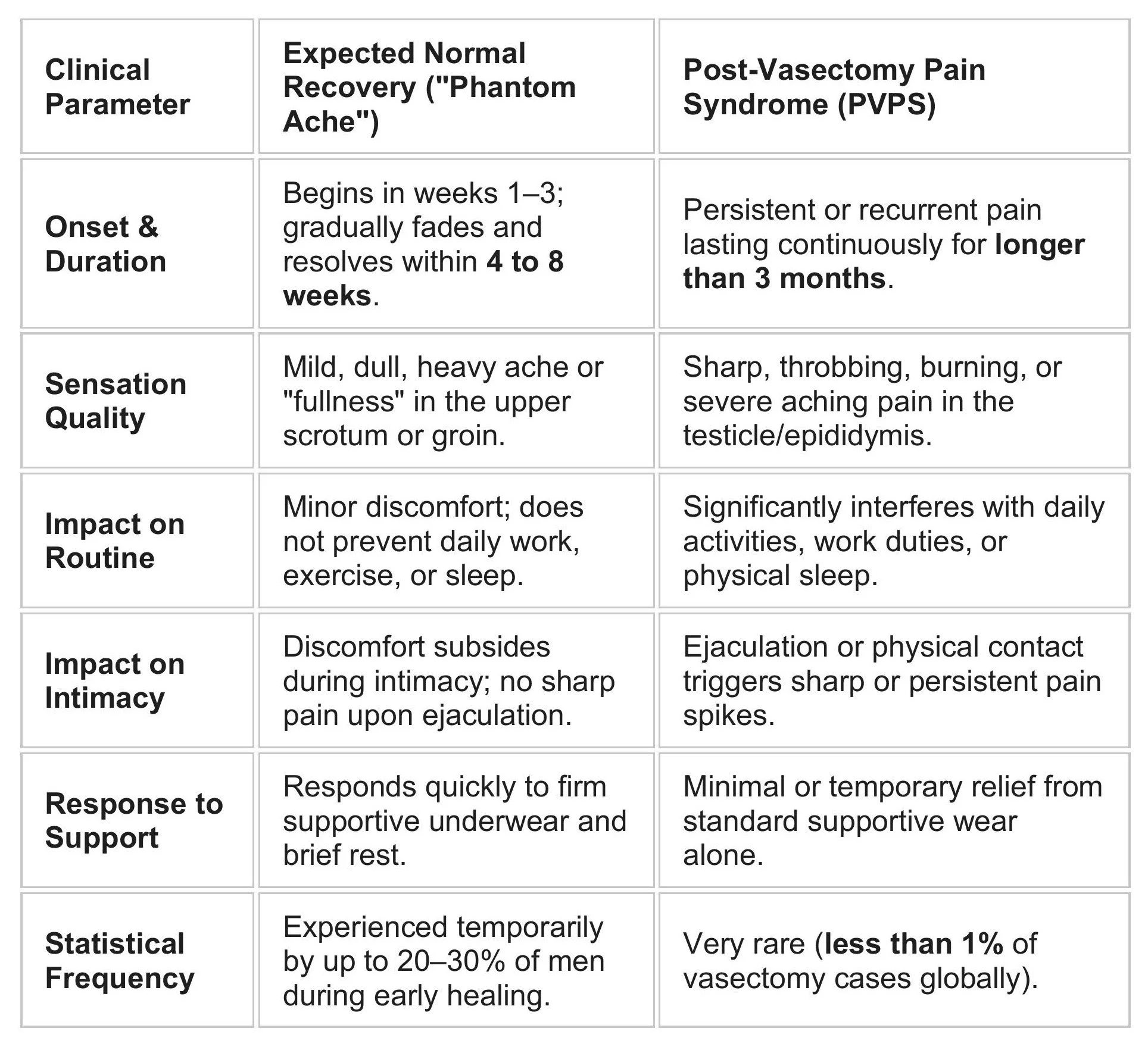
Normal Healing vs. Post-Vasectomy Pain Syndrome (PVPS)
Understanding the timeline, intensity, and characteristics of scrotal sensations helps you monitor your recovery accurately:
Maintain Scrotal Elevation: Gravity is the enemy of healing scrotal tissue. Wearing snug briefs or athletic supporters holds the testicles close to the body, preventing gravitational drag on the healing epididymis.
Avoid Heavy Lifting Too Early: Resuming heavy gym weightlifting, running, or strenuous trade labor before tissue margins consolidate increases pelvic floor pressure and worsens scrotal congestion.
Use Simple Anti-Inflammatory Medication: Short, approved courses of over-the-counter anti-inflammatories (such as ibuprofen, if medically safe for you) reduce localized tissue inflammation around the sealed vas ends.
Follow Clearance Testing Timelines: Continue flushing out residual sperm through normal, gentle ejaculatory activity once your initial 7-day post-op wound healing window has passed. Always continue alternative birth control until formal pathology testing confirms complete clearance (azoospermia) at 3 to 4 months.
When Should You Contact Your Doctor?
While a mild, dull ache is expected during early tissue adaptation, you should contact CircVas Doctor or seek medical review if you notice any of the following warning signs:
Sudden, severe, or rapidly escalating scrotal pain that is not relieved by simple analgesia.
A rapidly expanding swelling or hard lump in the scrotum (possible hematoma).
Redness, extreme warmth, or foul-smelling discharge from the micro-puncture site (signs of infection).
High fever or systemic feeling of illness.
Persistent, sharp pain during ejaculation that continues beyond 3 months post-procedure.
Practice Credentials & Safety Disclosures
Dr Rahul Tipnis (MBBS, MS, FRACGP) is a registered General Practitioner with an audited clinical record of over 200 no-scalpel vasectomies. He is not a specialist urologist or surgeon. Procedures at CircVas Doctor are performed exclusively for voluntary family planning indications following a comprehensive pre-operative evaluation.
All surgical procedures carry inherent clinical risks—including localized bleeding, hematoma formation, wound infection, temporary swelling, chronic post-vasectomy pain syndrome, and a low statistical risk of procedural failure or late spontaneous recanalisation.
A formal pre-operative consultation is mandatory. Alternative contraception must continue uninterrupted until a post-vasectomy semen analysis confirms complete clearance. Patients are always encouraged to seek an independent second opinion from a qualified health practitioner.
Arranging a Pre-Operative Consultation
If you are considering a no-scalpel vasectomy or have questions regarding post-operative care and recovery protocols, contact our team in Melbourne’s west.
📞 Contact CircVas Doctor: 1300 714 358
📍 Clinic Location: Harmony Health Medical Centre, 46 Hogans Road, Hoppers Crossing VIC 3029
(Serving patients across Hoppers Crossing, Truganina, Tarneit, Werribee, Point Cook, Geelong, and regional Victoria).
⚠️ Mandatory Medical Disclaimer
This publication is intended strictly for general educational purposes and does not substitute for direct medical diagnosis, advice, or a personalized treatment plan. All minor surgical procedures carry inherent clinical risks—including localized bleeding, hematoma formation, infection, temporary swelling, chronic pain, and a low statistical risk of failure or recanalisation. A formal, mandatory face-to-face clinical evaluation and consultation are required before any procedure can be scheduled. Dr Rahul Tipnis is a registered General Practitioner (FRACGP, AHPRA Registration: MED0001552566). No-scalpel vasectomy procedures are performed exclusively for verified family planning indications. Individual recovery outcomes vary. Patients are always encouraged to seek an independent second opinion from a qualified health practitioner regarding surgical interventions.
