
Normal Healing vs. Complications After Circumcision: A Clinical Guide
Written by Dr Rahul Tipnis, FRACGP | Date: 9th August 2026
Following a circumcision, closely monitoring the healing process is a standard part of post-operative care. Understanding the distinct differences between expected recovery milestones and potential clinical complications helps parents and adult patients navigate recovery with confidence while ensuring timely medical care if concerns arise.
This publication provides general, evidence-based educational information regarding post-operative healing trajectories. A mandatory pre-operative clinical consultation with Dr Rahul Tipnis is required to evaluate anatomical suitability, review medical backgrounds, and establish formal informed consent.
What Does Normal Healing Look Like?
Most circumcisions progress through systematic healing phases without complication. Standard physical observations during the initial recovery window include:
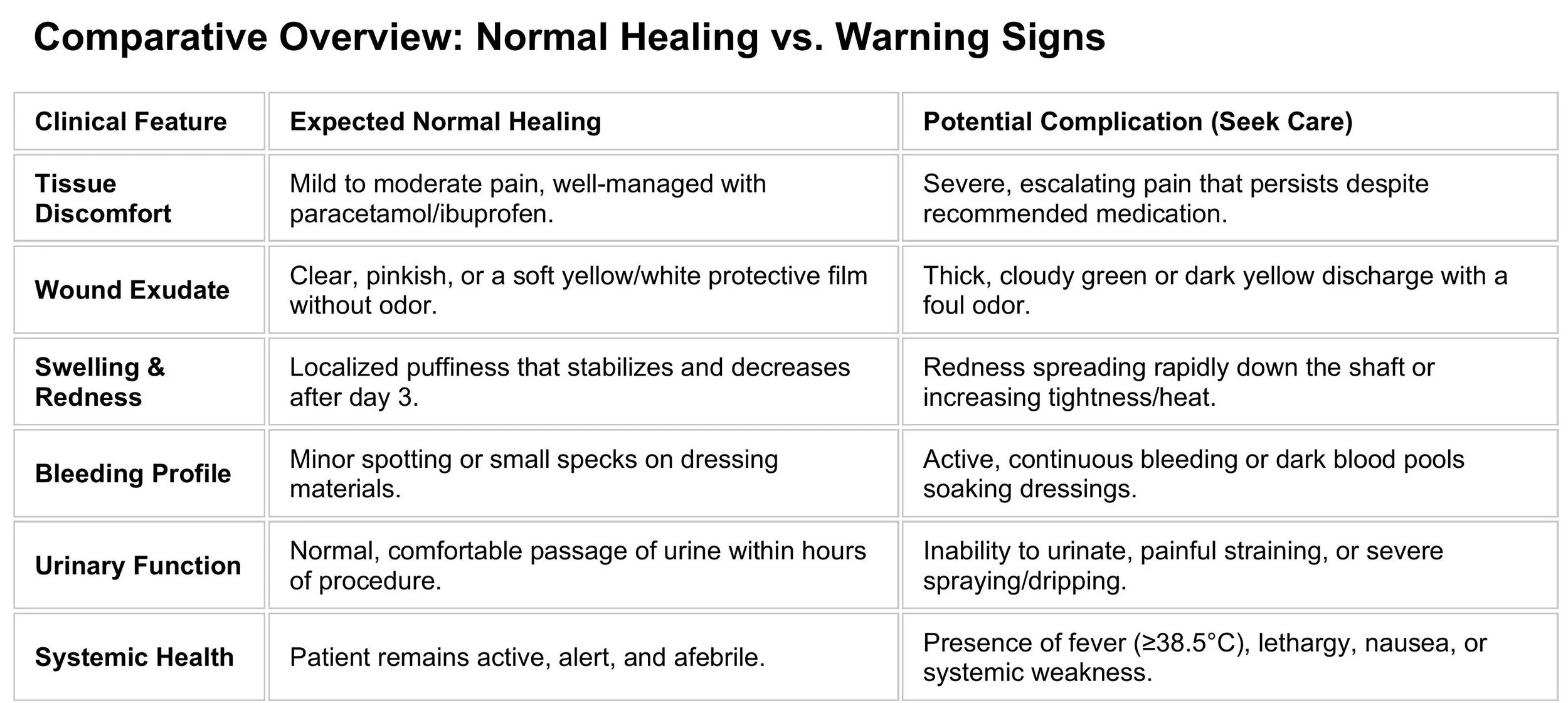
Mild Localized Redness and Swelling: It is normal for the glans and surrounding tissue to appear pink, red, or moderately puffy during the first 48 to 72 hours.
Minor Serosanguinous Discharge: A small amount of clear or slightly blood-tinged fluid oozing onto dressings or underwear is expected during the first few days.
Formation of a Soft Yellowish/White Film: Patients and parents frequently mistake this for pus or infection. In reality, this soft film consists of normal fibrinous exudate—a healthy, protective layer of tissue formed as part of the natural wound-healing process.
Gradual Reduction in Swelling: Primary localized swelling typically peaks within the first 3 days and gradually subsides over 7 to 14 days.
Ring or Staple Detachment: With the Plastibell technique (ages 6–14), the specialized plastic ring typically separates naturally between 5 to 10 days (and up to 14 days). For the ZSR Stapler technique (ages 14+), micro-staples separate over 2 to 4 weeks.
Comparative Overview: Normal Healing vs. Warning Signs
Typical Healing Timeline
Days 1–3 (Acute Phase): Peak localized swelling and mild discomfort. Strict rest, cold compression (if advised), and weight-appropriate pain relief are prioritized.
Days 4–7 (Intermediate Phase): Swelling begins to settle. Plastibell rings frequently loosen and separate during this window.
Days 7–14 (Late Surface Phase): Continued tissue normalization. Surface redness fades, and light, non-strenuous daily activities are resumed.
Weeks 2–4 (Full Tissue Consolidation): ZSR micro-staples complete separation, and deep tissue margins fully unite. Full return to sports or exercise is governed by individual medical guidance.
When to Contact the Clinic Immediately
While serious complications are uncommon, prompt clinical assessment is required if you observe any of the following warning signs:
Active Bleeding: Continuous dripping or bleeding that does not cease after applying gentle, direct pressure with clean gauze for 10 minutes.
Signs of Infection: Spreading redness, extreme heat around the shaft, or foul-smelling purulent discharge.
Urinary Retention: Inability to pass urine within 8 to 12 hours post-procedure, or signs of acute discomfort when attempting to void.
Delayed Ring Removal: A Plastibell ring that remains tightly fixed beyond 14 days, or a ring that has slipped out of alignment onto the penile shaft.
Professional Qualifications & Practice Standards
Dr Rahul Tipnis (MBBS, MS, FRACGP) is a registered General Practitioner with an audited clinical record of over 900 circumcisions. He is not a specialist urologist or plastic surgeon. All procedures at CircVas Doctor are performed following a thorough clinical assessment for medical, cultural, or religious indications.
All surgical procedures carry inherent risks—including localized bleeding, hematoma, infection, delayed device separation, temporary swelling, chronic discomfort, or variable cosmetic outcomes. A formal pre-operative consultation is mandatory, and patients or guardians are always encouraged to seek an independent second opinion from a qualified health practitioner.
Arranging a Consultation
If you reside in Hoppers Crossing, Truganina, Tarneit, Werribee, Point Cook, or surrounding areas and wish to evaluate circumcision options or discuss post-operative care protocols, contact our clinical team.
📞 Contact CircVas Doctor: 1300 714 358
📍 Clinic Location: Suprema Medical Centre, 583 Tarneit Road, Hoppers Crossing, Victoria 3029
⚠️ Mandatory Medical Disclaimer
This webpage is published strictly for general educational purposes and does not substitute for direct medical diagnosis, advice, or a personalized treatment plan. All minor surgical procedures carry inherent clinical risks—including localized bleeding, hematoma formation, infection, temporary swelling, delayed device separation, or altered cosmetic healing. A formal, mandatory face-to-face clinical evaluation and consultation are required before any procedure can be scheduled. Dr Rahul Tipnis is a registered General Practitioner (FRACGP, AHPRA Registration: MED0001552566). He does not perform cosmetic circumcisions; all procedures are performed strictly for verified medical, cultural, or religious indications. Individual recovery outcomes vary. Patients and guardians are always encouraged to seek an independent second opinion from a qualified health practitioner regarding surgical interventions.
